Six-legged mobility
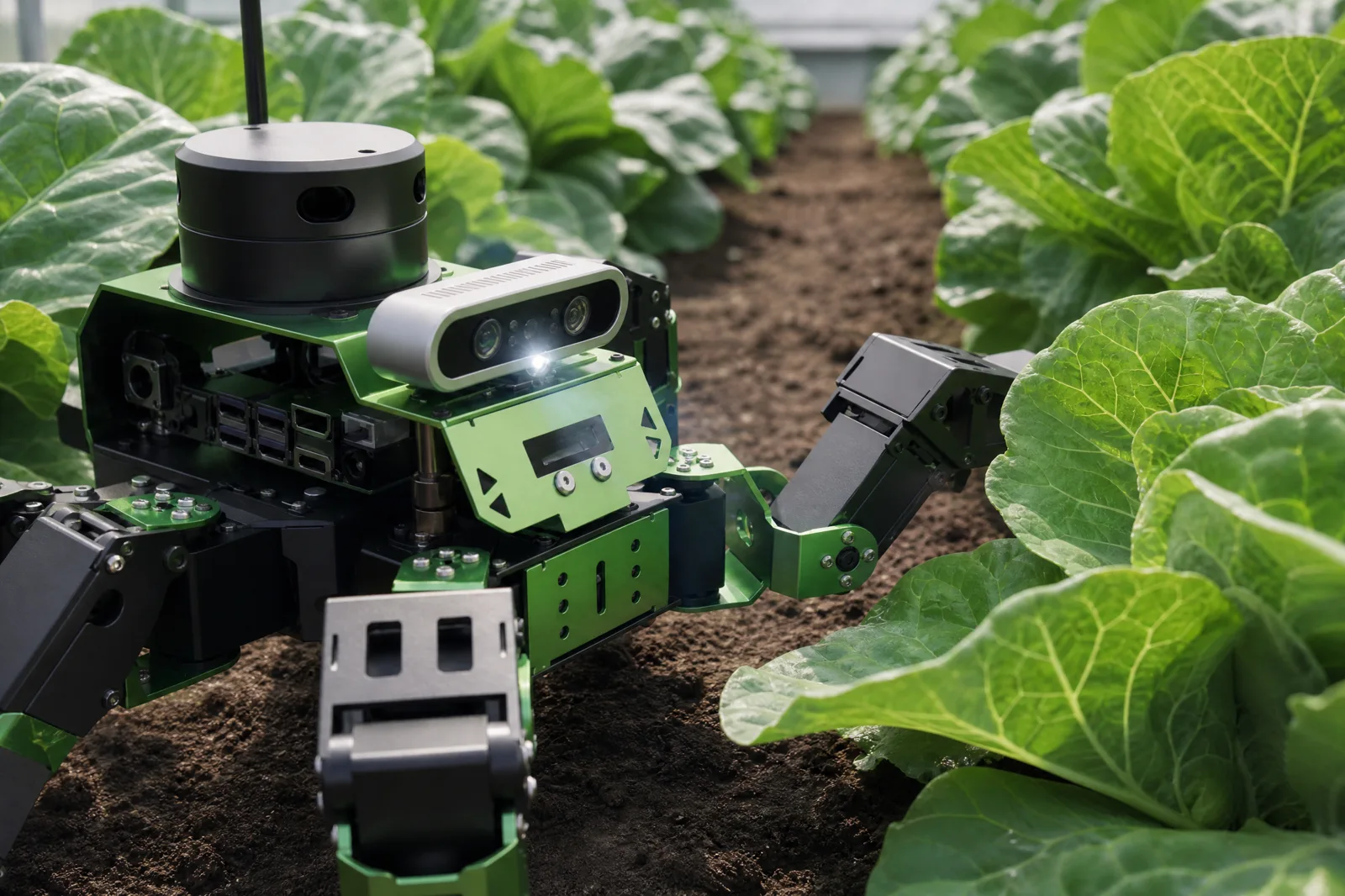
A legged chassis is intended to reach narrow rows and adapt to uneven growing surfaces with less disruption to plants. Terrain, weather resistance and battery life remain engineering challenges to validate.

One proposed platform for mobile scouting, pest recognition and plant-health insight beneath the canopy.
CONCEPT IN DEVELOPMENTOverhead views are useful. But the most important detail may be beneath a leaf or between crop rows.
S.P.I.D.E.R is designed as a six-legged robot that moves through growing areas, captures close-range images, reads plant reflectance and attaches location data to its observations. The goal: give growers context, not just another alert.
 VISUAL CONCEPT / ILLUSTRATIVE
A legged chassis is intended to reach narrow rows and adapt to uneven growing surfaces with less disruption to plants. Terrain, weather resistance and battery life remain engineering challenges to validate.
An onboard camera and machine-learning model are proposed to recognize selected pests and visible crop symptoms at close range. Performance in changing light, dust and foliage requires testing.
Reflectance measurements could add context about plant condition beyond the visible image. The relationship between measured signals and a specific cause of stress would need field calibration.
Geotagged records could help growers find the plants that merit a closer look and make more targeted, documented decisions. Treatment functions are future design goals, not deployed capabilities.
The ambition is a closed-loop workflow that supports integrated pest management: regular monitoring, earlier identification and a more deliberate response where it is needed. The robot is a decision-support concept; grower expertise remains central.
Talk to the team